
My career is dedicated to all aspects of satellite wind measurements. From new concepts, cal/val, wind retrieval optimization, operational production to applications and training in weather nowcasting. It involves data science, machine learning, NWP data assimilation, climate data records, ocean forcing, marine boundary layer and air-sea interaction research. I'm now leading a group on active remote sensing from satellites using radar and lidar for ocean winds, clouds and aerosol, and involved in the ESA Aeolus, EarthCare and HARMONY missions and participating in the EUMETSAT and Copernicus ground segment services. I am an IEEE fellow (http://www.ieee.org/) and my publications are on Google Scholar, ResearchGate and Orcid. You can also find some material on YouTube.
- Observing earth system dynamics on weather and climate scales
- Processing large grids and raster algebra using terra package (R)
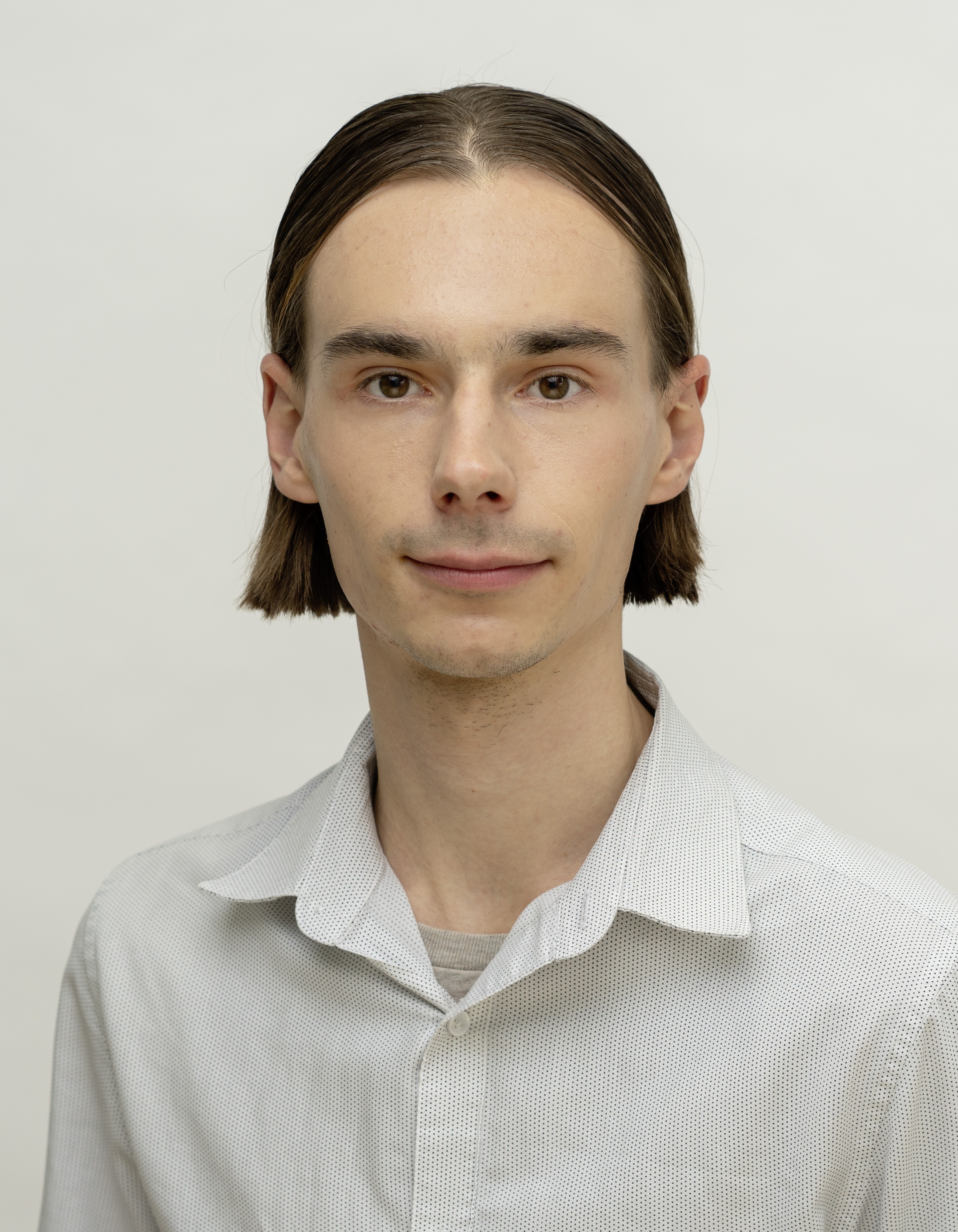
PostDoc at Max Planck Institute for Biogeochemistry in Jena, Germany. Develops software for ESA and Open Earth Monitor Project. Focused on Discrete Global Grid Systems and cloud workflows.
- Less distorted analyses of satellite imagery using Discrete Global Grid Systems in Julia

Post-doctoral researcher at OpenGeoHub Foundation. Working cross-projects to large scale space-time mapping with high-throughput computing.
- Discrete Global Grid Systems - Awareness raising about the future of GIS
- Space-time mapping at 30 m resolution based on Landsat ARCO data: hands-on for real case applications (python)
- What does high resolution mean? Space-based spectrometry for air quality & climate
- Cloud-based analysis of Earth Observation data using open-source software
- Raster and vector data cubes in R and Python
- Introduction to SURF

Jeroen Rietjens is a Senior Instrument Scientist at SRON Space Research Organisation Netherlands. He is the SPEXone Product Development Lead for the NASA PACE mission and in this role responsible for instrument operations. He is also the Lead Performance Engineer for SPEXone and thereby responsible for the data quality. Via this role he has been involved in almost every aspect of the SPEXone signal chain, from hardware design and procurement to calibration and data processing.
- Processing PACE data with Python: get a polarized hyperspectral view of the Earth

Jochen Landgraf is a senior scientist at SRON Netherlands Institute for Space Research and a guest professor at the Institute for Environmental Physics, University Heidelberg. At SRON he is head of a research group focusing on atmospheric remote sensing of trace gases from TANGO, TROPOMI, S5, and GOSAT observations. His group developed the algorithm and SW for the operational CO and CH4 data processing of the Sentinel-5P and Sentinel 5 mission. In several studies, his team demonstrated higher-level data applications of S5P CO and CH4 data. He is a member of the S4/S5 and CO2M mission advisory group and has led and contributed to many projects, including several for ESA and EUMETSAT. His scientific focus is on atmospheric radiative transfer and measurement inversion techniques but also includes new measurement concepts and instrument specifications.
- Atmospheric Greenhouse Gases and the Determination of Their Concentrations Through Satellite Observations
- The Radiative Transfer Theory

I recently defended my PhD thesis on using machine learning methods to analyze geospatial data. I'm now a senior lecturer at Adam Mickiewicz University in Poznan (Poland). I'm interested in remote sensing (especially in agriculture) and programming in R.
- Land Use and Land Cover Classification with Satellite Image Time Series in R
- Automatic acquisition and processing of satellite data in R
- Processing PACE data with Python: get a polarized hyperspectral view of the Earth

- Monitoring global grassland and pasture areas: An integrated approach based data-fusion and regional calibration
- AutoML: Automating machine learning applied to areal regression modeling

Assistant Professor at Utrecht University, working over the remote sensing of Cryosphere
- Cryosphere Tutorial in Python

Luís Moreira de Sousa completed the Degree on Informatics and Computers
Engineering at the University of Lisbon in 2002, which he complemented with a
Masters on Geographic Information Systems in 2005. In the Department of Civil
Engineering of this university he was a junior researcher from 2002 to 2008,
contributing to applied research projects with Instituto da Água and Estradas
de Portugal. After a year as consultant with SIQuant at the National Laboratory
of Civil Engineering (LNEC), in 2009 he became an independent consultant,
supporting de development of the spatial data infrastructure of the newly
created Administração da Região Hidrográfica do Tejo (ARH-Tejo).
In 2011 he joined the Henri Tudor institute in Luxembourg as Research Engineer,
where he contributed to the development of Spatial Decision Support Systems on
the domains of Energy and Urban Planning. At the time he was already a PhD
candidate on Informatics Engineering at the University of Lisbon, promoted by
Prof. Alberto Silva. In 2016 he concluded this graduation with a thesis on
domain specific languages for the development of spatial simulation programmes.
Still that year he started a post-doc position at EAWAG (Swiss Federal
Institute of Research on the Water Domain) during which he conducted research
on rapid flood modelling and storm water network management. In 2017 Luís
joined ISRIC - World Soil Information in The Netherlands where he conducted
research on the geography and ontology of world soils. In July of 2024 Luís
returned to the University of Lisbon, this time as Assistant Professor.
- Discrete Global Grid Systems - Awareness raising about the future of GIS
- GRASS GIS automation for Earth Observation with Python, R and Julia
- Introduction to GRASS GIS as a spatial analysis engine
- Less distorted analyses of satellite imagery using Discrete Global Grid Systems in Julia
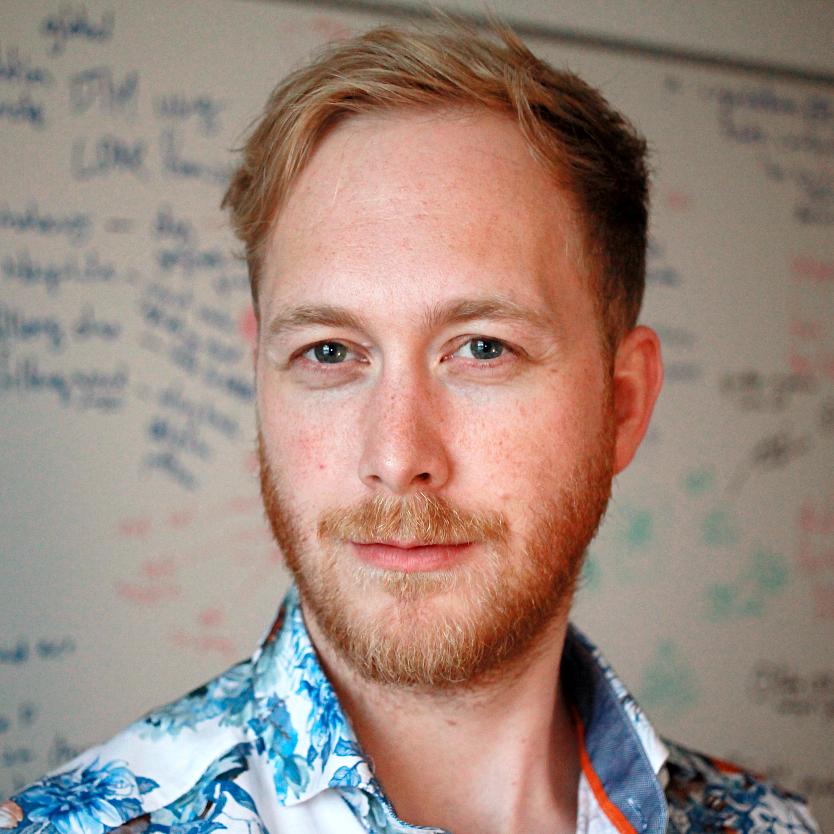
Maarten Pronk is a researcher at Deltares and an external PhD candidate at the Delft University of Technology. He holds a cum laude MSc in Geomatics and a BSc in Architecture, both from the Delft University of Technology (NL). His research concerns elevation modelling, especially in lowlands prone to coastal flooding. He aims to combine his interests in remote sensing and software engineering for societal impact. He promotes open and reproducible research and is the author of several open-source software packages for handling geospatial data, written in the Julia programming language. His work often involves handling trillions of elevation measurements, requiring a careful selection and design of both spatial storage formats and processing algorithms. Currently, he works on applying data from ICESat-2, a LiDAR satellite, on global elevation models.
- An introduction to Julia
- Geomorphometry in Julia
- High performance computing with Pyhton/RS-DAT
Mustafa Serkan Isik is a post-doctoral researcher at the OpenGeoHub Foundation, focusing on time-series analysis of Earth Observation data and space-time modelling. He holds a PhD in Geomatics and has a background in geodesy and remote sensing.
- Crash Course on Google Earth Engine API
- Geomorphometry: high-performance computing using GRASS GIS, and WhitboxTools in Python
Nico is an Assistant Professor at the University of Copenhagen associated with the Global Wetland Centre and the Pioneer Centre for AI. He is also a core member of the Climate AI Nordics network. Before moving to Denmark for a Postdoc, Nico has received a PhD from ETH Zurich. His research focuses on computer vision, machine learning, and remote sensing, and on developing new methods to support environmental sciences. More information can be found on his website: https://langnico.github.io/
- Learning From Global Earth Observation Data
- Learning Representations: From Engineering Features to Engineering Pretext Tasks

Paco Lopez-Dekker ( was born in Nijmegen, The Netherlands, in 1972. He received the Ingeniero degree in telecommunication engineering from the Universitat Politècnica de Catalunya (UPC), Barcelona, Spain, in 1997, the M.S. degree in electrical and computer engineering from the University of California at Irvine, Irvine, CA, USA, in 1998, under the Balsells Fellowship, and the Ph.D. degree from the University of Massachusetts, Amherst, MA, USA, in 2003, with a focus on clear-air imaging radar systems to study the atmospheric boundary layer.,In 2003, he joined Starlab Barcelona, Barcelona, where he was involved in the development of GNSS-R sensors and techniques. From 2004 to 2006, he was a Visiting Professor with the Department of Telecommunications and Systems Engineering, Universitat Autònoma de Barcelona, Barcelona, where he taught courses on signals and systems, signal processing, communications systems and radiation, and guided waves. From 2009 to 2016, he led the SAR Missions Group, Microwaves and Radar Institute, German Aerospace Center, Weßling, Germany, with a focus on the study of future synthetic aperture radar (SAR) missions, including the development of novel mission concepts and detailed mission performance analyses. He has been a faculty member at the Geoscience and Remote Sensing Department, Faculty of Civil Engineering and Geosciences, Delft University of Technology. Since March 2025 he is Professor in Radar Satellite Systems and Earth System Observation. He was the lead proposer and currently principal investigator of the Harmony mission, ESA's 10th Earth Explorer Mission, which is expected to be launched towards the end of 2029.
- Synthetic Aperture Radar: system specificaitons and performance trade offs
Pontus Lurcock is a software engineer at Brockmann Consult GmbH., with a strong focus on geodatacubes and analysis-ready earth observation data. He has extensive experience of working at the interface between informatics and geosciences, and holds an MSc in Computer Science and a PhD in Geology.
- Application Packages in the xcube ecosystem
- Build Advanced EO Workflows with Custom Functions in openEO within the Copernicus Data Space Ecosystem
- Introduction to openEO within the Copernicus Data Space Ecosystem

Head of the OptX section at SRON Space Research Organization Netherlands, touching in this role on optical design, performance and calibration engineering, and management of optical research activities.
- Overview of passive optical instruments for earth observation

Sander Houweling is professor in Atmosphere, Greenhouse Gases, and Climate of the Earth Sciences department of the Vrije Universiteit Amsterdam and affiliated also with NWO-i SRON Netherlands Institute for Space Research. His research focuses on the global cycles of long-lived greenhouse gases in the atmosphere and climate impacts of human activities. His research group at the Vrije Universiteit develops methods for estimating greenhouse gas emissions from atmospheric measurements using inverse modeling techniques at global, regional, and local scale. As member of the scientific steering committee of the Integrated Global Greenhouse Gas Information System (IG3IS) of the World Meteorological Organization (WMO) he is committed to independent evaluation of national greenhouse gas emission reports to the United Nations Convention on Climate Change (UNFCCC) using atmospheric measurements.
- Data use in remote sensing of the atmosphere

Dr. Serkan Girgin is an Associate Professor in the Geo-information Processing Department at the Faculty of Geo-information Science and Earth Observation (ITC), University of Twente. He has established and is currently leading ITC's Center of Expertise in Big Geodata Science (CRIB), a facility dedicated to advancing geospatial big data and cloud computing technologies by developing and sharing operational expertise. Dr. Girgin's research focuses on big data and cloud computing tools and infrastructures, with a particular emphasis on optimizing the performance and energy efficiency of geocomputing workflows. He also designs and develops tools and platforms that promote best practices in research software development and research data management, including fairly toolset, Open Data Explorer, and OpenSTAC. With over 30 years of experience in software development, his expertise spans geocomputing platforms, GIS and remote sensing applications, environmental information systems, and large-scale web applications.
- Monitoring EO workflows with precision for better performance and resource utilization

- Processing large grids and raster algebra using terra package (R)
- Closing and announcement of hackathon winners
- Spatiotemporal Machine Learning: 15 practical lessons on how to organize monitoring, modeling and updating of predictions
- Introduction to the EO Council

Research Assistant | Geoinformatician at OpenGeoHub Foundation, focus on big data analysis and processing
- Geomorphometry: high-performance computing using GRASS GIS, and WhitboxTools in Python
- Introduction of cloud-native vector format: hands-on in Python environment